

At the office of Michael G. Foust, DDS, we take a preventative-first approach to dental care. Regular oral exams are the foundation of that approach: they give your care team a clear picture of your current oral health, help catch developing problems early, and guide a sensible plan to keep your smile healthy for years to come. Our exams pair clinical observation with modern imaging and careful discussion so you leave the appointment with a clear understanding of what was found and why it matters.
Your initial exam is more than a routine check — it establishes the reference point against which future changes are measured. We begin with a review of your medical and dental history so we understand any medications, past injuries, or conditions that could affect oral health. This context helps the clinician interpret findings and tailor the exam to your unique needs.
The clinical portion of the exam inspects teeth, gums, soft tissues, and the joint that connects your jaw to your skull (the temporomandibular joint, or TMJ). We also evaluate bite alignment and check for habits such as clenching or grinding, which can wear teeth or strain supporting structures. When indicated, we take diagnostic images to look beneath the surface and document baseline conditions.
After the exam we explain what we observed in plain terms and outline possible next steps. Our goal is to make every recommendation clear and practical: whether it’s a schedule for routine cleanings, a targeted preventive treatment, or a referral for specialty care. This early clarity helps patients make informed decisions and avoid surprises down the line.

What happens in the mouth rarely stays in the mouth. Growing research shows meaningful connections between oral conditions and systemic health. Chronic gum inflammation, for example, is associated with elevated risks for cardiovascular concerns and can complicate blood sugar management in people with diabetes. Not every association indicates direct causation, but these links underscore why regular oral screening matters beyond aesthetics.
During an oral exam we look for signs that could point to broader health issues: persistent inflammation, unusual ulcerations, dry mouth, or rapid changes in oral tissues. We also screen for oral cancer during routine exams, checking the lips, tongue, cheeks, palate, and the tissues of the neck for any suspicious lumps or lesions that warrant further investigation.
Because systemic conditions often present oral symptoms first, the exam is an important opportunity to catch early signals and coordinate with your medical providers when appropriate. Preventive dental care therefore becomes an integral part of maintaining overall health, not just preserving teeth.

Daily brushing and flossing are essential, but even meticulous home care can miss hardened deposits and bacterial biofilm that accumulate in hard-to-reach places. Professional cleanings remove tartar and reduce bacterial load, lowering the risk of cavities and gum disease. During a cleaning we also polish away surface stains and assess trouble spots that may need closer monitoring.
Routine checkups give your dentist a chance to compare current findings with prior records. That comparison can reveal subtle progression — a filling that’s loosening, early gum recession, or the beginning of enamel breakdown — which are easier and less invasive to treat when found early. For children, regular exams ensure development is on track and make it easier to identify whether orthodontic guidance will be beneficial later.
Beyond clinical maintenance, these visits are educational: we demonstrate techniques, recommend products tailored to your needs, and answer questions about diet, habits, and oral appliances. The goal is to equip you with the knowledge and tools to prevent disease between visits so checkups remain a reinforcement, not a rescue.
For patients with risk factors such as a history of periodontal disease, a dry mouth, or certain medical conditions, we may recommend a personalized schedule of more frequent visits to manage risk proactively.
Visual inspection is only part of a thorough oral exam. Diagnostic radiographs (dental x-rays) let us see the parts of teeth and bone that are hidden from view. X-rays can reveal cavities between teeth, the health of tooth roots, bone levels around teeth, and lesions that are not clinically visible. For children and adults alike, these images are invaluable diagnostic tools.
Digital radiography has modernized this process: images are acquired quickly with lower radiation exposure, viewed immediately on-screen, and stored in your digital record for side-by-side comparisons. Digital images can be enhanced to reveal subtle changes and can be easily shared with specialists when collaborative care is needed.
When a deeper or three-dimensional view is required for diagnosis or treatment planning, cone-beam computed tomography (CBCT) provides a detailed 3D reconstruction of the jaws and surrounding structures. CBCT is especially useful for implant planning, assessing impacted teeth, and evaluating complex anatomy before surgical procedures.
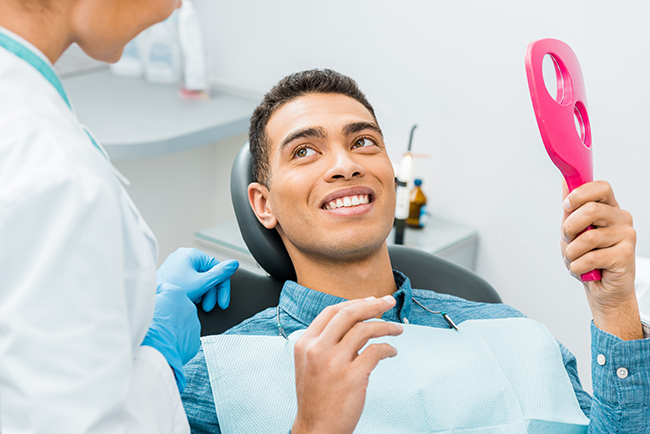
Not every visit requires every type of image. The choice of radiograph depends on what we need to see. Bitewing films focus on the crowns of back teeth and are excellent for detecting early decay between teeth. Periapical films show the entire tooth from crown to tip of the root and are used when root health or local bone support is in question. A full mouth series provides a comprehensive set of periapical and bitewing images when a broad baseline is needed.
Panoramic films give a wide view of the jaws and are useful for assessing impacted or developing teeth, jaw fractures, or large-scale changes across the dental arches. Cephalometric images, used mainly in orthodontic evaluation, show facial and jaw relationships that help plan growth-related or orthodontic care. When clinicians need the most complete spatial information, a CBCT scan can be recommended for three-dimensional planning.
Every imaging decision balances diagnostic value against the principle of minimizing exposure. We only recommend imaging that benefits your diagnosis or treatment plan and will explain why a particular image is helpful in your case. When images are taken, they become part of your permanent record and are a powerful tool for tracking change over time.
To summarize, comprehensive oral exams combine attentive clinical evaluation, targeted imaging, and patient education to identify issues early and preserve oral health. Regular visits help detect problems when they are simplest to manage and support overall well-being. If you have questions about what an oral exam involves or whether you should schedule one, please contact us for more information.


At the office of Michael G. Foust DDS Dental Practice, an oral exam is a focused clinical evaluation that checks the health of your teeth, gums, soft tissues, bite and jaw function. The goal is to identify early signs of decay, gum disease, wear from habits such as clenching or grinding, and any unusual tissue changes that may need follow-up. Exams combine hands-on inspection with diagnostic imaging and a conversation about your history to form a clear picture of oral health.
An oral exam is important because it establishes a baseline and guides preventive care tailored to you. Early detection often allows for simpler, less invasive care and better long-term outcomes. After the exam the clinician will explain findings in plain language and recommend a sensible plan for monitoring or treatment.
The first oral exam documents your starting point so future changes can be compared reliably. It begins with a review of your medical and dental history, current medications and any past injuries or treatments that could affect oral health. Clinicians then perform a systematic clinical inspection of teeth, gums, soft tissues, bite alignment and the temporomandibular joint to record present conditions.
When indicated, diagnostic images are taken to document hidden areas such as between teeth and beneath the bone. These records become the reference for subsequent visits and help the team interpret subtle changes over time. Establishing a clear baseline also allows your clinician to recommend a personalized schedule for cleanings and reevaluations.
For most patients, oral exams paired with professional cleanings are commonly scheduled every six months, but the optimal interval varies by individual risk. Factors such as a history of periodontal disease, a dry mouth, active decay, certain medications, or systemic health conditions may warrant more frequent monitoring. Your clinician will recommend a schedule based on your baseline findings and ongoing risk assessment.
Regular intervals enable timely detection of developing problems and make treatments simpler when they are needed. Keeping consistent appointments also provides opportunities for education about home care and habit modification. If your situation changes between visits, you should contact the office for an earlier evaluation.
Oral exams include a systematic oral cancer screening that inspects the lips, tongue, cheeks, palate, floor of the mouth and the tissues of the neck. Clinicians look for persistent sores, white or red patches, unexplained lumps, or other unusual changes in tissue texture or color. Because early-stage lesions can be subtle, documentation and comparison with previous exams are essential.
If a suspicious area is identified, the next steps typically include photographic documentation, targeted imaging or referral for a biopsy as clinically indicated. Early detection greatly improves the effectiveness of treatment, so any persistent lesion or symptom lasting longer than two weeks should be evaluated promptly. The exam also provides an opportunity to discuss risk factors such as tobacco, alcohol and HPV exposure.
Diagnostic imaging complements visual inspection by revealing structures hidden from view, such as interproximal decay, root health and bone levels around teeth. Common images include bitewing films for detecting decay between molars, periapical films to assess individual tooth roots and panoramic images for a broad view of the jaws. Digital radiography is the current standard because it produces high-quality images quickly with lower radiation exposure and immediate on-screen review.
Cone-beam computed tomography (CBCT) provides three-dimensional information when complex anatomy or surgical planning requires it, and Michael G. Foust DDS Dental Practice uses CBCT selectively for implant planning, impacted tooth assessment and complex diagnostics. The choice of image is always guided by diagnostic need and the principle of minimizing exposure. When images are taken they are stored in your record for comparison at future exams and can be shared with specialists if collaborative care is needed.
Professional cleanings remove hardened deposits and biofilm that daily home care cannot fully eliminate, which reduces bacterial load and lowers the risk of cavities and gum disease. During the same visit, clinicians evaluate pocket depths, tissue health and any areas that warrant closer monitoring. Cleanings also polish surfaces and make it easier to spot early enamel changes or failing restorations.
Combining a cleaning with an exam ensures that the clinician assesses teeth and gums in a cleaner environment and can provide immediate education on targeted homecare. For patients with active periodontal disease or other risk factors, the clinical team may recommend a more frequent cleaning and monitoring schedule. These visits are both preventive and diagnostic, helping to maintain oral health between more extensive treatments.
Certain changes merit prompt attention rather than waiting for a routine visit, including new or severe pain, swelling, persistent bleeding, loose teeth or sores that do not heal within two weeks. Other warning signs include sudden changes in bite, increased sensitivity to hot or cold, unexplained numbness or tingling, and any lump or thickening in the mouth or neck. These symptoms can indicate infection, trauma, progression of disease or more serious conditions that require timely assessment.
If you notice any of these symptoms, call the office so a clinician can advise whether an urgent appointment is needed. Early evaluation often prevents problems from worsening and helps avoid more invasive interventions. The office staff can also guide you on interim care measures to manage discomfort until you are seen.
Oral health and systemic health are closely connected; findings in the mouth can reflect or influence broader medical conditions. Chronic gum inflammation has been associated with an elevated risk of cardiovascular concerns and can complicate blood sugar control in people with diabetes, among other associations. Because some systemic diseases present oral signs early, dental exams can play an important role in overall health monitoring.
When the exam reveals signs that may relate to a medical condition, the dental team documents findings and, with your permission, communicates with your medical providers to coordinate care. This collaborative approach helps ensure that oral concerns are considered in the context of your full health history. Regular dental screening therefore supports not only a healthy smile but also broader wellness.
Pediatric oral exams focus on development, eruption patterns and preventive strategies that address a child’s specific risk factors. Clinicians assess eruption sequences, spacing, early signs of decay, and oral habits such as thumb-sucking or prolonged pacifier use that may affect alignment. For younger patients the exam also considers the need for sealants, fluoride support and timing of future orthodontic evaluations.
Behavior guidance and parental education are integral parts of a child’s visit, with clinicians demonstrating brushing and flossing techniques and discussing diet and habit management. Regular exams help track growth and make early recommendations when interceptive care could reduce future complexity. The goal is to establish a positive, preventive relationship with the dental team that supports long-term oral health.
To prepare, bring an updated list of medications, any relevant medical records and a summary of recent dental treatments or concerns you want addressed. Arrive with your questions so the appointment can cover your priorities, and let the staff know of any health changes since your last visit. If you have recent x-rays or imaging from another provider, bring them or arrange to have them transferred for continuity of care.
After the exam you will receive a clear explanation of the findings, recommended next steps and a follow-up plan tailored to your needs. This may include a schedule for routine cleanings, targeted preventive treatments or referrals when specialized care is indicated. The clinician will also provide practical home-care advice to help you maintain oral health between visits.

Ready to schedule, or would you like to ask a few questions first?
Either is welcome. During office hours you will reach a member of our team who can discuss treatment options, verify your insurance benefits, and find an appointment time that works around your schedule. Outside office hours, send us a message through the contact form and we will respond the next business day. A consultation carries no obligation to proceed with treatment.
