

If your dentist has recommended root canal therapy, there’s no cause for undue worry. Modern endodontic care is predictable, comfortable, and focused on relieving pain while preserving your natural tooth whenever possible. Root canal treatment is often the simplest path to stop an infection, end persistent discomfort, and keep your smile intact.
At Michael G. Foust, DDS we combine experience with current technology to make treatment efficient and as gentle as possible. Patient comfort and clear communication are central to how we approach care: we explain why a procedure is recommended, outline what to expect, and tailor treatment to each person’s needs.
Teeth are designed to last a lifetime, and when the internal tissues of a tooth become damaged, root canal therapy gives that tooth a second chance. By removing the diseased pulp, cleaning the internal anatomy, and sealing the canals, a treated tooth can return to function and avoid the consequences of extraction.
Choosing to preserve a tooth with root canal therapy helps maintain chewing efficiency, preserves adjacent teeth from extra stress, and supports the surrounding bone and gum architecture. In many cases, a restored natural tooth provides a more stable, long-term outcome than alternative options.
Advances in instruments, anesthesia, and imaging have made the procedure more predictable and comfortable than older techniques. When performed with modern methods, root canal treatment has a high success rate and is a reliable way to protect both your oral health and your quality of life.

The tissues inside a tooth—known as the dental pulp—contain nerves and blood supply that keep a tooth responsive and healthy during development. When decay, trauma, or repeated restorative work reaches that inner chamber, irritation or infection can follow. Recognizing the warning signs early helps prevent more extensive problems.
Symptoms range from intermittent sensitivity to clear, persistent pain. While not every ache requires a root canal, certain patterns are especially suggestive of pulp involvement. If you notice any of the following changes, it’s wise to arrange an evaluation without delay.
Common indicators include increased sensitivity to hot or cold that lingers, a deep ache that intensifies when lying down or at night, and discomfort when biting or chewing. Other signs can be visual—such as darkening of a tooth after an injury—or physical, like swelling near the gumline or drainage that suggests an abscess.
Unrelenting tooth pain, especially when it disrupts sleep or persists despite over-the-counter remedies, often points to significant pulp inflammation or infection that should be evaluated promptly.
If a hot or cold sensation remains long after the stimulus is removed, the nerves inside the tooth may be compromised and require treatment to prevent further damage.
A tooth that becomes darker following an injury or extensive decay may indicate internal changes to the pulp. Even without pain, this type of change merits attention because it can signal loss of vitality.
Gum swelling, the presence of a pimple-like bump on the gum, or a loose tooth are signs that an infection may have spread beyond the pulp. These symptoms require timely evaluation and care.

Delaying treatment of an infected or irreversibly damaged pulp can allow the problem to progress. What begins as localized inflammation can extend to the root tip and surrounding bone, increasing the chance of bone loss, spreading infection, or the need for more invasive procedures later on.
Some teeth with significant internal damage are surprisingly quiet and show minimal symptoms. Those cases are often identified on routine radiographic exams, which is why regular dental visits are important. Early detection usually means simpler, more predictable treatment.
Addressing pulp problems promptly also minimizes the risk of systemic effects that can arise from chronic oral infection. While serious complications are uncommon, treating the source of infection under controlled, professional care is the safest course.
Root canal therapy today follows a clear, stepwise approach designed to be comfortable and efficient. The tooth is anesthetized so you remain relaxed and pain-free. Using magnification and precise instruments, the dentist accesses the root system, removes infected tissue, and carefully shapes the canals for disinfection.
Imaging—often digital radiographs and, when appropriate, three-dimensional scans—helps map canal anatomy and verify that the treatment addresses the entire infected area. Some cases are completed in a single visit; others require two appointments, especially if an active infection needs time to resolve between visits.
After cleaning and shaping, the canals are sealed with a biocompatible material and the tooth receives a temporary or permanent seal. Because treated teeth can be more brittle, a final restoration such as a crown is frequently recommended to restore strength and protect the tooth long-term.
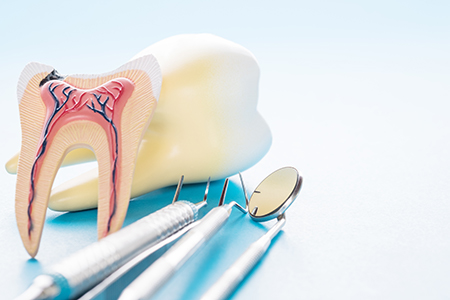
Recovery after a root canal is typically straightforward. Mild to moderate soreness for a few days is common as surrounding tissues heal, and this can usually be managed with over-the-counter pain relief and short-term home care. If antibiotics are prescribed for spreading infection, it’s important to take the full course as directed.
You’ll be advised to protect the treated tooth until a definitive restoration is placed; chewing on a temporary filling should be avoided to reduce the risk of fracture. Maintaining excellent oral hygiene and attending follow-up visits ensures the tooth and surrounding structures heal properly.
With proper restoration and routine care, a tooth that has undergone root canal therapy can function for many years, often for the remainder of a person’s life. Periodic radiographs and exams allow us to confirm ongoing success and address any concerns early.
You may experience numbness while the local anesthetic wears off and mild discomfort as tissues recover. Avoid chewing on the treated side until your provider confirms the tooth is fully restored.
Follow any medication directions carefully and contact the office if pain intensifies or new swelling appears. Routine brushing and gentle flossing around the tooth support healing.
Placing a permanent crown or onlay as recommended helps prevent fracture and restores normal chewing. Your clinician will discuss the optimal timing based on your individual situation.
At Michael G. Foust, DDS our goal is to make root canal therapy clear, comfortable, and successful for each patient. We focus on explaining options, using technology that improves precision, and restoring teeth to reliable function.
If you have tooth pain, noticed changes in color, or have concerns following dental trauma, don’t wait to have the situation evaluated. Contact us to learn more or to schedule an appointment for a thorough assessment.


A root canal is a restorative procedure that removes diseased or injured pulp from the interior of a tooth, cleans and shapes the canal system, and seals it to prevent reinfection. The goal is to relieve pain, stop the spread of infection, and preserve the natural tooth whenever possible. Keeping your natural tooth helps maintain chewing function and supports the surrounding bone and gum tissues.
Root canal therapy is commonly recommended when deep decay, trauma, or repeated restorative work has reached the tooth's pulp and caused inflammation or infection. Without treatment, the infection can progress to the root tip and surrounding bone, making future care more complex. Early diagnosis through symptoms or routine radiographs usually leads to a simpler, more predictable outcome.
Contemporary root canal treatment uses advanced anesthesia, magnification, and engine-driven instruments that make the process more efficient and comfortable than older techniques. Modern materials for cleaning and sealing canals are biocompatible and provide more reliable long-term outcomes. These improvements reduce procedure time and minimize post-procedure discomfort for most patients.
Imaging technology such as digital radiography and three-dimensional cone beam scans allows clinicians to map canal anatomy precisely and plan treatment with greater confidence. When indicated, clinicians may use an intraoral camera to show patients what they see and explain the plan clearly. Together, these tools increase the predictability of treatment and support better preservation of the tooth.
Common indicators include lingering sensitivity to hot or cold, persistent or severe tooth pain, discomfort when biting, and gum swelling or a pimple-like bump near the tooth. A tooth that darkens after trauma or extensive decay may also signal loss of vitality even in the absence of acute pain. Any of these changes should prompt an evaluation to determine whether the pulp is compromised.
Not every problematic tooth exhibits obvious symptoms, so routine dental exams and radiographs play an important role in detection. Some infected or necrotic pulps are discovered on X-rays before the patient notices clinical signs, which is why regular dental care is valuable. Early assessment typically allows for more conservative, predictable treatment.
During the procedure the tooth is anesthetized, so most patients are comfortable and experience immediate relief from the intense pain that often accompanies pulp inflammation. After the appointment, mild to moderate soreness in the surrounding tissues is common as the area heals, and this usually responds to over-the-counter medication and short-term home care. The severity and duration of post-procedure discomfort vary with the preoperative condition and the complexity of the case.
If there was a spreading infection, your clinician may prescribe antibiotics in addition to the root canal to help control the infection before or after treatment. Persistent or worsening pain after treatment is uncommon but should prompt a prompt follow-up evaluation. Timely communication with your provider helps resolve issues quickly and supports the best possible outcome.
Treatment begins with a thorough examination and appropriate imaging to assess canal anatomy and the extent of infection. After administering local anesthesia, the dentist creates a small access opening to reach the pulp chamber, then removes diseased tissue, shapes the canals, and disinfects the system using precise instruments and irrigants. The canals are then filled with a biocompatible material and sealed to reduce the risk of reinfection.
Some cases are completed in a single visit while others require two appointments when an active infection needs additional time to resolve between visits. Dr. Michael Foust uses magnification and digital tools to enhance accuracy and to explain findings to patients during the visit. Finally, a definitive restoration such as a crown is discussed to restore function and protect the treated tooth long term.
Recovery is usually straightforward; mild soreness around the treated tooth and surrounding gum tissue is common for several days and can be managed with recommended over-the-counter medications. Patients are advised to avoid chewing on the treated tooth until a permanent restoration is placed to reduce the risk of fracture. Maintaining gentle but thorough oral hygiene helps the area heal and prevents new decay around the temporary filling.
It is important to attend any scheduled follow-up visits so the clinician can confirm healing radiographically and determine the timing for a final restoration. If antibiotics were prescribed, complete the full course as directed to ensure control of infection. With appropriate restoration and routine care, a root canal-treated tooth can function predictably for many years.
Although root canal therapy has a high success rate, reinfection can occur if a canal is missed, an untreated accessory canal is present, new decay exposes the restoration, or the tooth sustains a fracture. Complex anatomy or an undetected issue at the root tip can also contribute to later problems. Early symptoms such as renewed pain, swelling, or changes on a follow-up radiograph can signal the need for further evaluation.
If reinfection is confirmed, options include retreatment of the canal system, apical surgery to address the root tip, or, in rare cases, extraction if the tooth cannot be predictably retained. The best approach depends on the specific circumstances and the health of the surrounding bone and tissues. Prompt assessment improves the likelihood of a successful resolution.
After the pulp is removed and the canals are sealed, the remaining tooth structure can be more brittle and therefore more susceptible to fracture under normal chewing forces. A crown restores the tooth's form and function, protects the treated root system, and helps prevent bacterial leakage that could lead to recurrent infection. For back teeth or those with large restorations, a crown is frequently the most predictable way to ensure long-term function.
The timing and type of final restoration are personalized based on the tooth's location, remaining tooth structure, and bite forces. Your clinician will explain the options and recommend the restoration that best balances strength, appearance, and longevity. Proper restoration and routine dental care significantly increase the chances that the treated tooth will remain healthy for many years.
Root canal procedures can be adapted to accommodate patients who experience anxiety, limited time, or special needs by using additional comfort measures and clear, unhurried communication. Options such as scheduling longer or earlier appointments, using proven local anesthetic techniques, and applying calming communication strategies make the visit more manageable. Many practices also provide nitrous oxide or other sedation modalities when appropriate and clinically indicated.
Before treatment, an unhurried consultation allows the team to discuss your concerns, medical history and any sedation preferences so a safe, tailored plan can be created. Clear expectations, modern anesthesia, and a supportive environment help most patients complete treatment comfortably. If you have specific medical or behavioral considerations, share them during the initial evaluation so care can be planned accordingly.
Michael G. Foust DDS Dental Practice uses current technology such as digital radiography, cone beam three-dimensional imaging when indicated, intraoral cameras, and magnification to map anatomy precisely and guide treatment. These tools help the clinician identify canal configurations, confirm complete cleaning, and verify obturation for predictable outcomes. Gentle anesthetic techniques and attention to patient comfort are integrated into every step of care.
The practice's single-doctor model means the person who evaluates you is involved directly in your treatment, which supports continuity and clear communication. Patients are encouraged to ask questions and review their own images during consultations so they understand the diagnosis and proposed plan. This combination of technology, experience and attentive communication helps deliver accurate, comfortable root canal care.

Ready to schedule, or would you like to ask a few questions first?
Either is welcome. During office hours you will reach a member of our team who can discuss treatment options, verify your insurance benefits, and find an appointment time that works around your schedule. Outside office hours, send us a message through the contact form and we will respond the next business day. A consultation carries no obligation to proceed with treatment.
